Nov 06, 2026
Motorsport safety depends on a complete restraint system rather than a single component. Racing seats, harnesses, mounting hardware, and driver positioning must work together to provide reliable protection during high-speed driving and impact conditions. At Jiabeier, we understand that buyers sourcing a custom racing harness need to consider more than strap materials, buckle designs, and appearance. Compliance with recognized motorsport safety standards is an essential part of the purchasing process.
As a manufacturer specializing in racing seats, racing simulators, and automotive seating solutions, Ruian JIABEIR Auto Parts Co., Ltd. pays close attention to the relationship between seat design and restraint compatibility. Understanding FIA and SFI requirements helps distributors, racing equipment brands, and OEM buyers define suitable product specifications before placing orders.
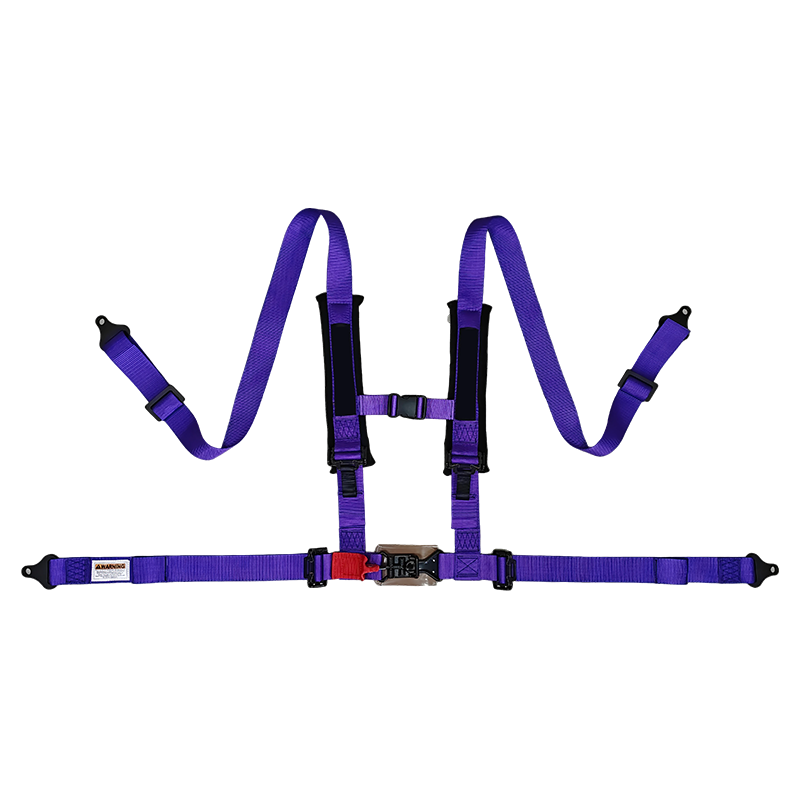
A racing harness is designed to restrain the driver's body during acceleration, braking, cornering, and collision events. Unlike a standard automotive seat belt, a motorsport restraint system generally uses multiple straps to control upper-body and pelvic movement.
Safety standards establish technical requirements for construction, testing, identification, and product service life. They also provide buyers with a reference for comparing different harness configurations.
Several purchasing considerations make certification particularly important:
At Jiabeier, we encourage buyers to identify their intended motorsport application before confirming a harness specification. A product suitable for recreational off-road driving may not satisfy the technical requirements of a professional circuit racing championship.
The Fédération Internationale de l'Automobile (FIA) establishes technical standards for motorsport safety equipment. FIA 8853-2016 is an important specification covering competition safety harnesses.
FIA 8853-2016 addresses restraint systems comprising pelvic straps, shoulder straps, and crotch straps. Its standard configuration includes six straps in contact with the driver's body, with an optional additional Z strap permitted under the specification.
Key design considerations include:
The FIA specification includes dynamic and quasi-static testing procedures. These tests evaluate the restraint assembly under controlled loading conditions and assess its ability to maintain structural integrity.
FIA 8853-2016 was developed with reference to accident data and motorsport safety research. Its requirements address performance during frontal and angled frontal impacts, making the standard relevant to professional competition equipment.
FIA homologation is not simply a marketing label. Manufacturers must follow the applicable approval process, including testing through an FIA-approved test house and submission of the required technical documentation.
Buyers should verify several details before accepting an order:
FIA 8853-2016 includes a five-year validity period for approved harnesses. Buyers should still check the current homologation information and championship regulations rather than relying on a general replacement schedule.
The SFI Foundation provides another widely referenced motorsport safety specification. SFI 16.1 covers driver restraint assemblies used in competitive motorsports, with defined testing procedures and performance requirements.
Webbing is a critical structural component of a racing harness. Its strength, elongation characteristics, and resistance to damage influence the restraint assembly's performance under load.
Under SFI 16.1, the specified webbing test requirements include the following reference loads:
| Test Item | Reference Load | Approximate Metric Value |
| Lap and shoulder belt elongation test | 2,500 lb | 11.1 kN |
| Anti-submarine belt elongation test | 1,500 lb | 6.7 kN |
| Lap and shoulder webbing breaking strength | 6,300 lb | 28 kN |
| Anti-submarine webbing breaking strength | 1,500 lb | 6.7 kN |
The specification also defines an elongation range of 5% to 20% at the applicable test loads for the specified webbing samples. These figures are technical testing requirements, not recommended operating loads for an installed harness.
Webbing strength alone cannot establish the performance of a complete restraint system. Buckles, adjusters, attachment fittings, and connecting components also require attention.
SFI 16.1 includes assembly testing to evaluate whether the restraint system can withstand specified loads without component failure. It also limits total slippage through manual adjusters and release mechanisms to 1 inch (2.54 cm) under the prescribed test conditions.
At Jiabeier, we recommend that OEM buyers review the following details during product development:
An important distinction between FIA and SFI systems concerns product certification and service-life documentation.
Under the SFI 16.1 program, participating manufacturers certify that their restraint assemblies meet the applicable specification. SFI provides the program framework and licensing requirements, but does not independently certify or endorse individual manufacturers or their products under this program.
The SFI specification list identifies a two-year recertification period for 16.1 driver restraint assemblies. Buyers should check the applicable label, manufacturer instructions, and competition regulations to establish the replacement schedule.
FIA and SFI specifications serve different regulatory environments. The correct option depends on the target market, racing organization, and vehicle application. A buyer should not assume that compliance with one standard automatically satisfies another organization's requirements.
| Comparison Item | FIA 8853-2016 | SFI 16.1 |
| Organization | Fédération Internationale de l'Automobile | SFI Foundation |
| Product category | Competition safety harnesses | Driver restraint assemblies |
| Testing approach | Dynamic and quasi-static testing | Webbing and restraint assembly testing |
| Identification | FIA homologation labels and numbers | SFI specification identification label |
| Service-life reference | Five-year homologation validity | Two-year recertification period |
| Common purchasing consideration | FIA-listed product and competition eligibility | Manufacturer participation and dated certification |
This comparison provides a general purchasing reference. Actual acceptance depends on the relevant racing regulations, current technical lists, and product documentation.
Since FIA requirements can be revised, buyers should also monitor updates to the 8853-2016 specification. The FIA published updates approved in December 2024, with applicable changes for new homologations and re-homologations taking effect from January 1, 2026.
A compliant restraint assembly must also work with the racing seat and vehicle installation. Incorrect mounting positions, unsuitable strap openings, or incompatible hardware can undermine the intended restraint function.
Racing seats are designed with specific shoulder belt openings to accommodate different driver positions and harness configurations. The opening height and angle should correspond with the harness manufacturer's installation instructions.
During OEM seat and harness coordination, we recommend reviewing:
Harness attachment points must be designed to withstand the loads specified by the applicable restraint and vehicle regulations. Mounting directly to an unsuitable floor panel or an unreinforced bracket can create serious structural concerns.
SAE Grade 5 or metric 8.8 fasteners are referenced in various motorsport installation regulations, including SCCA requirements. However, buyers should follow the specific vehicle and competition rules rather than treating a bolt grade as a universal installation approval.
Shoulder belts, lap belts, and anti-submarine straps also require correct positioning. Their mounting angles, attachment locations, and adjustment methods should follow the harness manufacturer's instructions.
Certification is only one part of a successful sourcing process. Buyers working with racing equipment manufacturers also need clear product specifications, traceability documents, and production quality requirements.
At Jiabeier, we suggest preparing a purchasing checklist covering the following areas:
| Purchasing Category | Information to Confirm |
| Safety standard | FIA 8853-2016, SFI 16.1, or another required specification |
| Harness configuration | 4-point, 5-point, 6-point, or other approved arrangement |
| Webbing specifications | Material, width, thickness, color, and stitching details |
| Buckle design | Release type, structure, material, and operating requirements |
| Attachment hardware | Hook type, mounting thread, dimensions, and surface finish |
| Documentation | Test reports, homologation records, labels, and inspection information |
| Packaging | Individual packaging, branding, barcode, and carton specifications |
| Quality inspection | Material checks, dimensional inspection, assembly verification, and traceability |
Material consistency is important for repeatable product performance. Buyers should request clear information about webbing suppliers, hardware specifications, stitching processes, and inspection procedures.
Useful quality documentation may include:
Different racing markets may require different strap colors, seat configurations, buckle styles, and brand identification. OEM and ODM projects should establish these details before production begins.
At Jiabeier, our manufacturing background includes racing seats, racing simulators, and gaming chairs. Our company operates a 10,000-square-meter manufacturing facility and maintains IATF 16949:2016 certification. Our production experience supports coordination between seating design, material selection, and customer-specific requirements.
For buyers developing a coordinated racing seat and restraint package, we recommend sharing technical drawings, seat dimensions, target vehicle information, and applicable competition rules during the quotation stage.
One important qualification deserves attention: customization does not automatically transfer an existing FIA homologation or SFI conformity status to a modified product. Changes to webbing, stitching, buckle components, strap geometry, or other controlled design elements may affect compliance. Any certification-related modification must follow the relevant approval procedures.
Several sourcing issues can create unnecessary costs or regulatory difficulties during product acceptance. Our experience with automotive seating projects suggests paying particular attention to these areas:
Ruian JIABEIR Auto Parts Co., Ltd. has focused on automotive seating and motorsport-related products since 2009. Our business covers the research, development, and production of racing seats, racing simulators, and gaming chairs.
Our manufacturing and engineering resources support different customer requirements, including:
Our facility includes two in-house production lines and a professional team supporting product development and manufacturing. We also hold multiple utility model patents and design copyrights, reflecting our continued investment in automotive seating technology.
For projects involving certified safety restraints, we recommend defining the required approval status and documentation at the beginning of technical communication. Buyers should confirm whether the requested harness model is already homologated or whether a separate certification process is necessary.
Hot Products

If you are interested in our products, please consult us!
contact us
E-mail: [email protected]
Tel: +86-577 6681 1072+86-577 6556 8920
WeChat / WhatsApp: +86-139 5884 2868
Add: Jiangnan Avenue Economic Development Zone, Nanbin Street, Ruian, zhejiang, China.
Copyright © by Ruian JIABEIR Auto Parts Co., Ltd. Rights Reserved.
Car Seats Manufacturer & Custom Modified Car Seats


 English
 русский
 Español
 Português