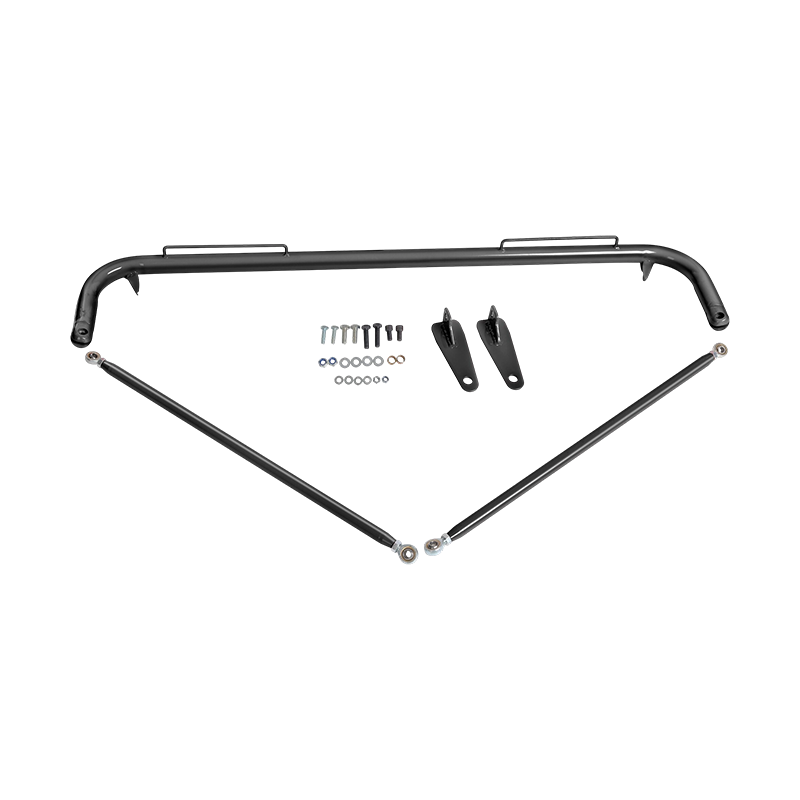
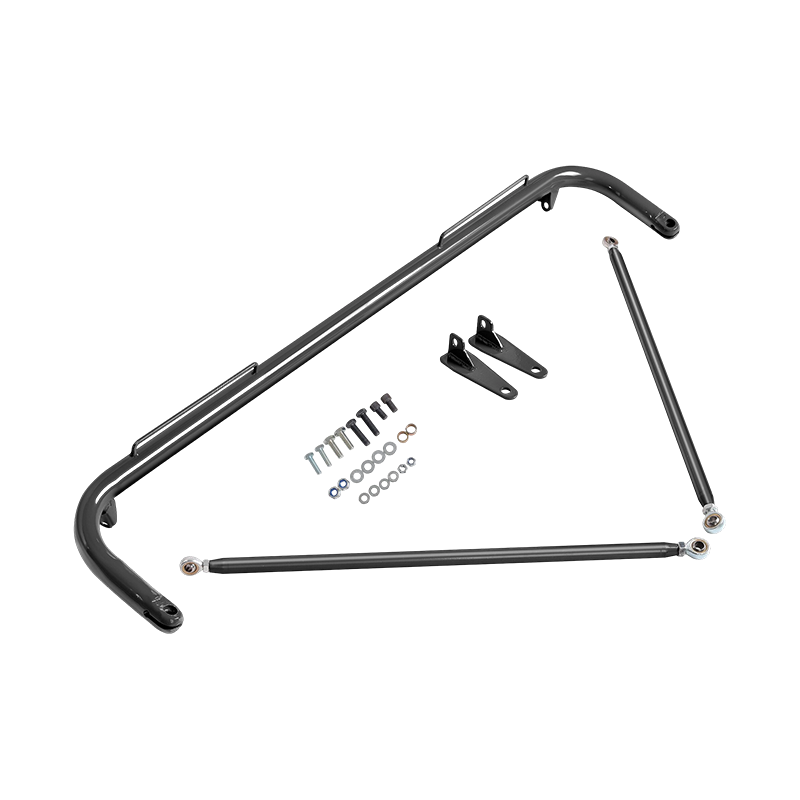
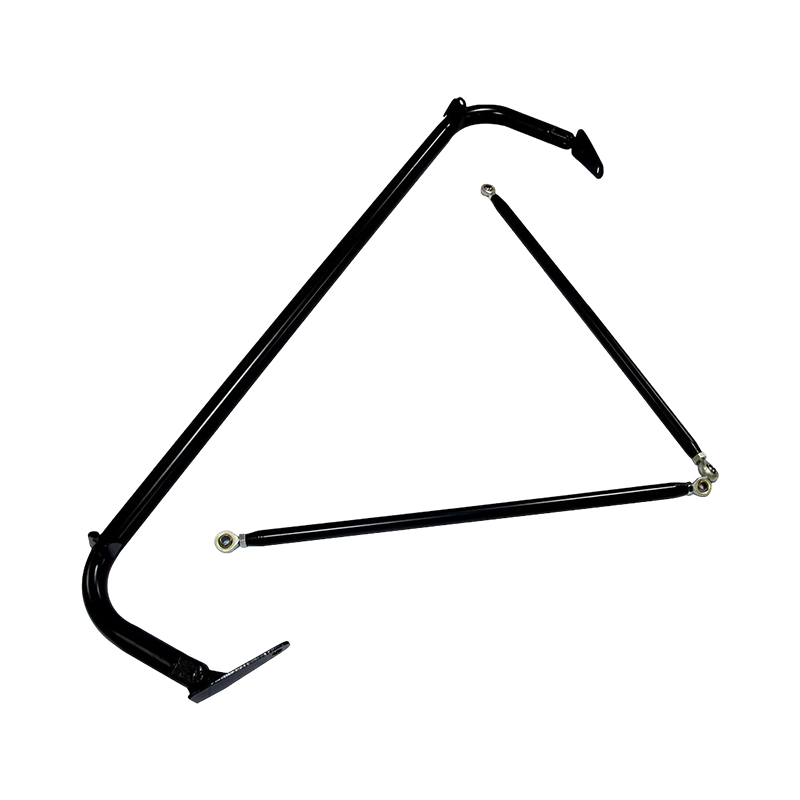
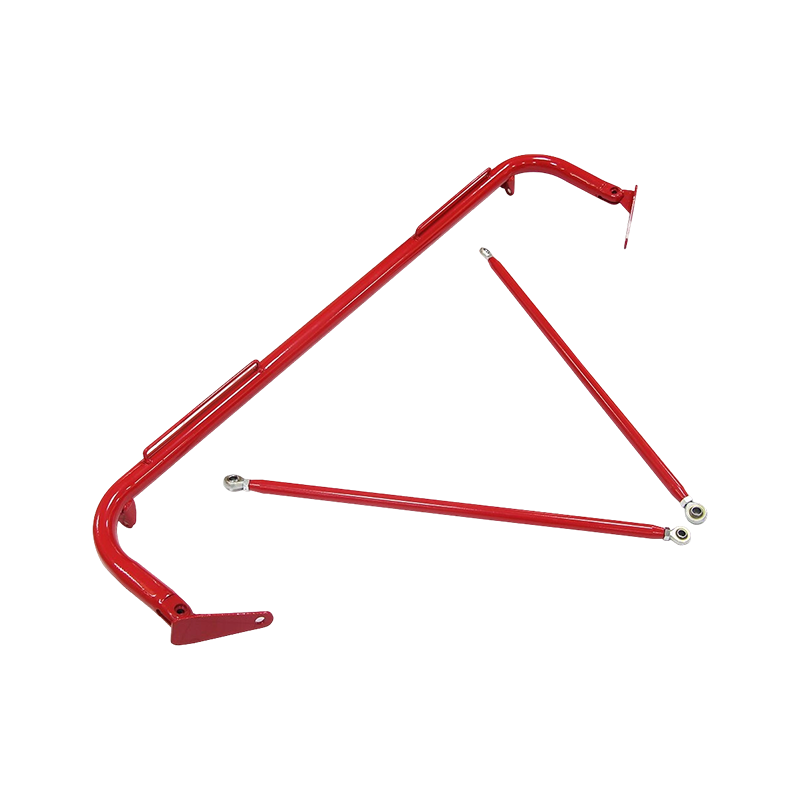
What ODM Means for a Harness Bar
An ODM harness bar is not a generic part pulled from a catalog. The ODM relationship means the manufacturer designs and produces the bar specifically for another brand, which then sells it under its own name. Unlike OEM (which follows existing specifications), ODM allows the buying brand to request unique features: different tube diameters, custom mounting brackets for specific chassis, or exclusive finishes. The same factory might produce harness bars for five different brands, each with distinct shapes and hardware.
A small performance parts brand wants to add harness bars to its catalog without investing in a welding shop. The brand contracts an ODM manufacturer to produce a bar for the Nissan 350Z and Infiniti G35 chassis. The manufacturer already has the mounting points mapped from previous work. The brand requests a cross-brace design (an extra tube between the main hoop and the floor mount) that the manufacturer's standard bar lacks. The ODM factory modifies the jig, runs 50 units, and powder coats them satin black. The brand receives finished bars in six weeks, packages them in branded boxes, and sells them at a 2.5x markup over the ODM landed cost.
ODM vs. Off-the-Shelf vs. Custom Harness Bars
|
Aspect
|
ODM Harness Bar
|
Off-the-Shelf Harness Bar
|
One-Off Custom Harness Bar
|
|
Design ownership
|
Buying a brand owns the design
|
The factory owns the design
|
Buyer owns the design
|
|
Minimum order quantity
|
25–100 units
|
1 unit
|
1 unit
|
|
Per-unit cost (manufacturer)
|
Low (volume pricing)
|
Medium (retail or wholesale)
|
High (engineering + fabrication)
|
|
Lead time for the unit
|
4–8 weeks (prototype + production)
|
1–5 days (stocked item)
|
2–4 weeks
|
|
Fitment guarantee
|
High (built for a specific chassis)
|
Variable (generic or multi-fit)
|
Very high (custom to exact car)
|
|
Brand customization
|
Logo, color, and packaging included
|
None or sticker-only
|
Anything the buyer specifies
|
Why Are Custom Harness Bars Popular?
A custom harness bar deviates from mass-produced designs in at least one dimension: chassis fitment, mounting style, tube routing, or accessory mounting points. Off-the-shelf bars fit the common cars (Miata, 350Z, BRZ, Mustang, Civic). Everything else requires custom work. Popularity follows from the simple fact that track cars are not common.
The Five Reasons Demand Stays High
Chassis variation across model years. A 1990 Miata has different seat belt anchor positions than a 2005 Miata. Off-the-shelf bars often list compatibility as "1990-2005," but the mounting brackets require slotting or spacers. A custom bar eliminates guesswork by fitting the specific year and submodel.
Aftermarket seat interference. Installing wider race seats or side-mount brackets changes the space behind the seat. A standard harness bar designed for factory seats may contact the shoulder wings of a competition seat. Custom bars move the main hoop rearward or bend the shoulder tubes outward for clearance.
Roll bar integration. Track cars with roll bars need harness bars that mount to the roll bar structure rather than seat belt anchors. Custom fabrication welds a harness cross-tube directly between the roll bar's main hoop legs. No off-the-shelf bolt-in bar works in this configuration.
Harness angle requirements. Safety regulations (FIA, SFI, and track day organizers) require shoulder straps to angle downward no more than 20 degrees from horizontal. A tall driver in a low-mounted seat may exceed this angle with a standard bar height. Custom bars raise the harness mounting points specifically for that driver's seating position.
Hidden or interior-friendly mounting. Some drivers want harness bars that remove without visible holes in the interior trim. Custom designs use existing bolt locations behind panels or mount to welded studs. Off-the-shelf bars often require drilling through carpet or cutting trim covers.
How to Choose a Racing Seat Belt Bar
What a Racing Seat Belt Bar Actually Does
A racing seat belt bar (commonly called a harness bar) provides anchor points for shoulder straps in cars without a roll cage. The bar mounts transversely across the cabin behind the front seats, typically attaching to factory seat belt anchor locations, B-pillar bolts, or rear seat mounting points. Its only job is to position the shoulder harnesses at the correct height and angle. It does not provide rollover protection—that requires a roll bar or cage.
Three Criteria That Determine the Right Choice
Vehicle-specific vs. universal fitment. A vehicle-specific bar uses pre-measured brackets that bolt directly to chassis mounting points. Installation takes 30 to 90 minutes with hand tools. A universal bar uses adjustable brackets and slotted tubes. Installation requires measuring, cutting spacers, and often drilling new holes. The time difference is significant: two hours versus six to eight hours for someone with basic fabrication skills. Vehicle-specific bars cost more upfront but save labor. Universal bars cost less, but assume the installer has a drill press and a welder.
Material and construction quality. The bar must withstand a sudden forward load of roughly 3,000 to 5,000 lbf (pounds of force) distributed across two shoulder straps in a crash. DOM (drawn over mandrel) steel tubing with 1.5 to 1.75 inch outer diameter and 0.120 inch wall thickness is the accepted standard for track day use. Avoid bars made from seamless pipe (lower impact resistance) or aluminum (fatigue concerns). Welds should be full penetration, not tacked or stitched. Look for continuous welding around every tube junction.
Harness wrap compatibility. The bar's shape affects how the harness straps wrap around the tubing. A straight round tube works with wrap-around harness ends (the common type). A square or oval tube may not allow the harness webbing to lie flat, creating a stress point. The bar diameter should match the harness hardware—most shoulder strap ends are designed for 1.5 to 2.0 inch diameter tubing. Larger bars require longer bolts or adapter brackets.
How to Choose Based on Your Car and Use Case
|
Consideration
|
Choose Vehicle-Specific Bar
|
Choose Universal Bar
|
|
Your car model
|
Common track car (Miata, BRZ, Mustang, Civic, 350Z, 370Z, BMW 3-series)
|
Uncommon or older car with no dedicated product
|
|
Your fabrication skill
|
Beginner or intermediate (hand tools only)
|
Advanced (drill press, angle grinder, ability to cut and weld spacers)
|
|
Installation time available
|
2 hours or less
|
6+ hours plus possible rework
|
|
Seat type
|
Factory seats or standard side-mount race seats
|
Custom seat position requiring non-standard bar height or setback
|
|
Roll bar present
|
No roll bar (bar mounts to chassis)
|
Yes (bar must integrate with roll bar; custom fabrication recommended regardless)
|
|
Harness type
|
Wrap-around (fits 1.5-2.0 inch tubing)
|
Bolt-in harnesses requiring specific mounting tabs
|

 English
 русский
 Español
 Português